

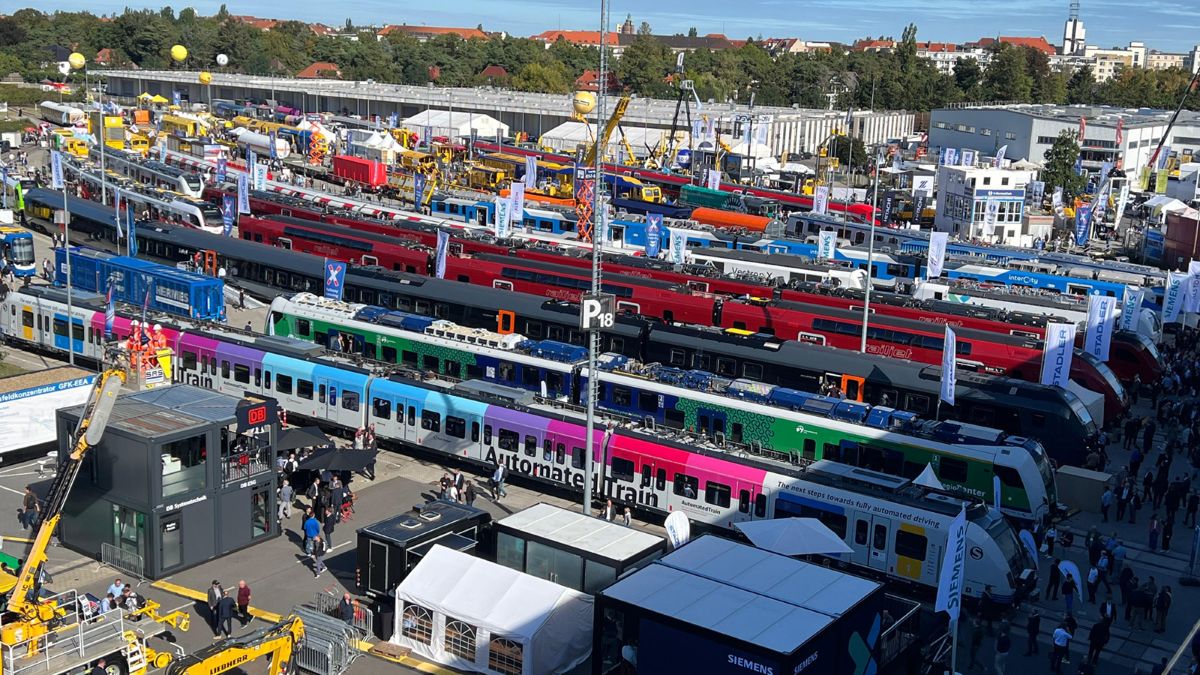
InnoTrans: A glimpse into the future of rail and mobility
Following his return from InnoTrans in Berlin, one of the world’s leading transport technology shows, we spoke with David Karney, Innovation Manager at Magellan, for his take on the biggest trends, hot topics and innovations shaping the future of rail and mobility.
The Real-World Application of AI
What were the biggest themes or trends you noticed at InnoTrans?
AI was everywhere. What struck me was how often the discussion centred on specific railway problems: supporting operational decisions, improving planning, helping maintenance teams and giving passengers better information.
From my perspective, the exciting part is how these capabilities could work together. A disruption affects the control room, staff deployment, customer information and retail simultaneously. Connecting those functions gives us an opportunity to improve the response across the railway.
InnoTrans also gave me a much broader understanding of how the industry works. When you spend your time developing rail operations software, seeing the vehicles, infrastructure and equipment it supports is incredibly valuable.
Closing the Loop Between Operations and Retail
Were there any talks or conversations that particularly stood out?
The Trainline presentation stood out. They discussed digital pay-as-you-go, making Delay Repay part of the customer journey and using AI chatbots to support refunds, disruption and travel information.
The message I took away was that the retail relationship continues long after someone buys a ticket. Passengers need support throughout their journey, particularly when something goes wrong.
For Magellan, that raises an interesting question: how do we make better use of the connection between the systems running the railway and the services passengers experience?
It was also useful to look at businesses such as Tracsis, SilverRail, Masabi, Resonate, 3Squared and Ticketer. Tracsis felt particularly relevant as a comparison with our own business, while conversations with people from Arup, Capgemini and RAIL created useful opportunities to follow up beyond the event.
Three Key Takeaways for Innovation
What were your biggest takeaways from the show?
Three things stood out for me.
First, AI needs to earn its place. There is plenty of enthusiasm, but the useful test is whether it saves staff time, supports better decisions or improves the passenger experience.
Second, understanding the whole railway makes us better innovators. Seeing how different parts of the industry operate helps us identify where our products can make a meaningful difference.
And third, demonstrations make innovation tangible. For future events, I’d like us to show more of our technology working, including live customer information and experiences through AR glasses. A working demonstration gives people something concrete to discuss.
The Future: Responsible AI and Connected Services
What did InnoTrans tell you about where rail is heading over the next few years?
My expectation is that AI assistance will become increasingly common in everyday railway work. The challenge will be introducing it responsibly into existing systems, with reliable data and clear human oversight.
I also expect closer connections between operations and passenger services. Better information about what is happening on the railway should help people make travel decisions and receive support more quickly.
For Magellan, our established role in rail operations gives us a strong foundation. The opportunity is to build on that knowledge, test new ideas with customers and demonstrate measurable improvements.
I left Berlin encouraged by the direction of our work, and with a clearer sense of where we should focus next.