Moving from CSRD compliance to operational management: insights from OPmobility & Imerys
The start of the morning was devoted to a key question for businesses: how can CSRD requirements be turned into drivers of operational transformation?
Two major industrial groups, OPmobility and Imerys, shared their experiences:
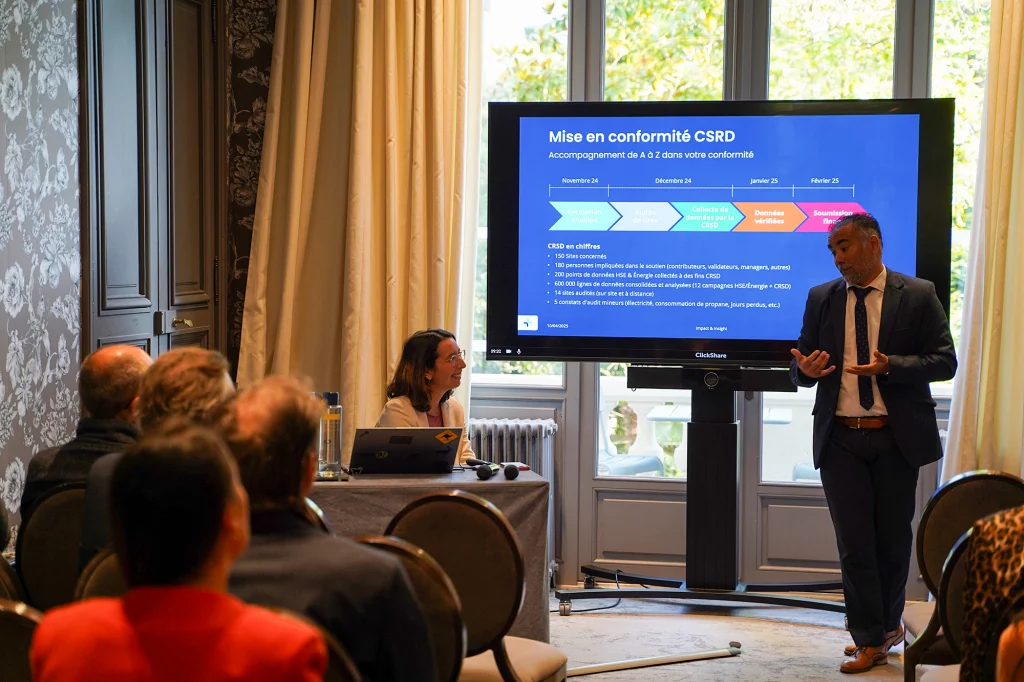
- OPmobility, a French automotive components manufacturer, presented an ambitious digitalisation project carried out in partnership with VPWhite, as part of the publication of its first CSRD sustainability report. The challenge was clear: to adapt Enablon’s applications to the new CSRD requirements, whilst preserving existing processes and contributors’ working habits. The work was therefore carried out mainly behind the scenes, through the addition of calculated indicators, smart questionnaires and targeted automations. The result: a seamless and minimally intrusive management process, rolled out across 150 sites worldwide.
- Imerys, a specialist in minerals for industry, presented a practical case study on the digitalisation of ESRS E2 (Pollution) using a structured methodology, as part of its CSRD compliance programme. This initiative was based on the Enablon platform, which was used to organise the collection and structuring of data across industrial sites, with the aim of moving from local and fragmented management to a centralised, auditable and actionable repository at corporate level. To achieve this, the company adopted an incremental approach, involving environmental risk analysis and the gradual consolidation of data, whilst enhancing data quality and traceability. This approach has enabled the creation of a reliable and structured repository, aligned with the double materiality analysis and the requirements of the CSRD.
These case studies have demonstrated the positive impact of a collaborative methodology, supported by tools and tailored to business realities.
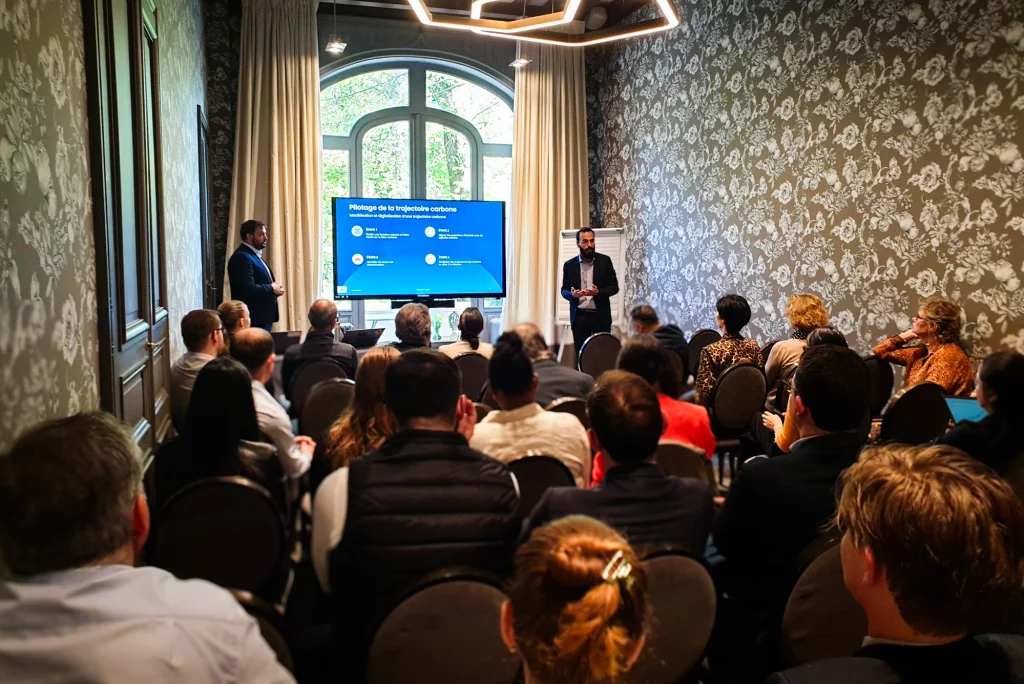
Carbon trajectory: modelling and steering the decarbonisation strategy
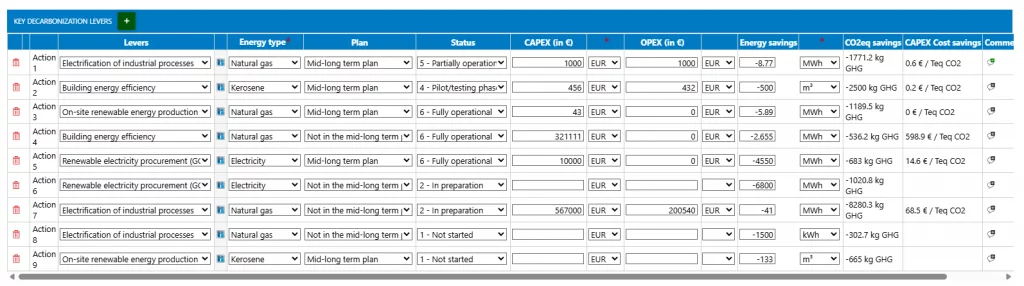
The second part of the event highlighted how we support our clients in modelling and managing their low-carbon trajectories using Enablon modules specifically configured by our developers and business experts.
To this end, we deploy a step-by-step, digitalised methodology to model decarbonisation scenarios:
- Establishing a reliable baseline based on carbon inventories;
- Align activity projections with emissions reduction targets;
- Identify decarbonisation levers (energy efficiency, procurement, mobility, etc.);
- Modelling multiple scenarios to support strategic decision-making.
Management and monitoring of decarbonisation actions
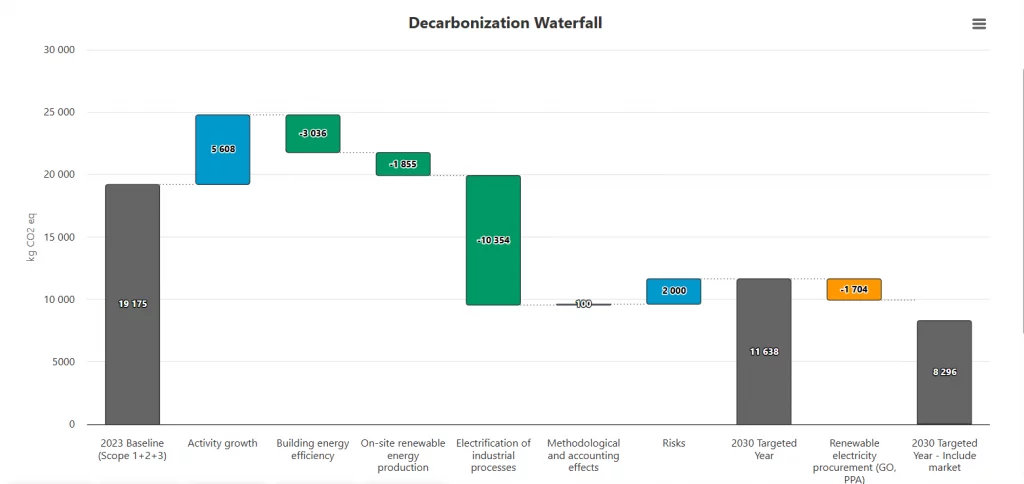
An example of a ‘waterfall’ chart for managing the carbon trajectory
Key benefits for an organisation: informed decision-making, increased transparency, collaboration between stakeholders. By linking the carbon trajectory to strategic management, companies are now moving from annual carbon reporting to truly proactive management of their climate footprint.
Integrating climate risks into ESG strategy
One of France’s leading banks has shared how it integrates climate risks into its property and ESG strategy.
In response to the requirements of the ECB (European Central Bank) and the EBA (European Banking Authority), our client has developed a phased approach:
- Mapping climate-related hazards (floods, droughts, fires, rising temperatures, sea-level rise, etc.);
- Cross-referencing these with the company’s critical assets (offices, data centres, key sites, etc.);
- Integration of these impacts into Business Impact Analyses (BIAs) and risk governance.
This approach highlighted the importance of having an ESG platform capable of linking climate data, asset locations and financial modelling, in order to manage resilience and business continuity.
Redesigned Enablon interfaces for intuitive management
Magellan has carried out in-depth work to overhaul the user experience (UX) of Enablon’s applications, with a clear ambition: to transform the platform into a genuine ESG dashboard serving contributors and decision-makers.
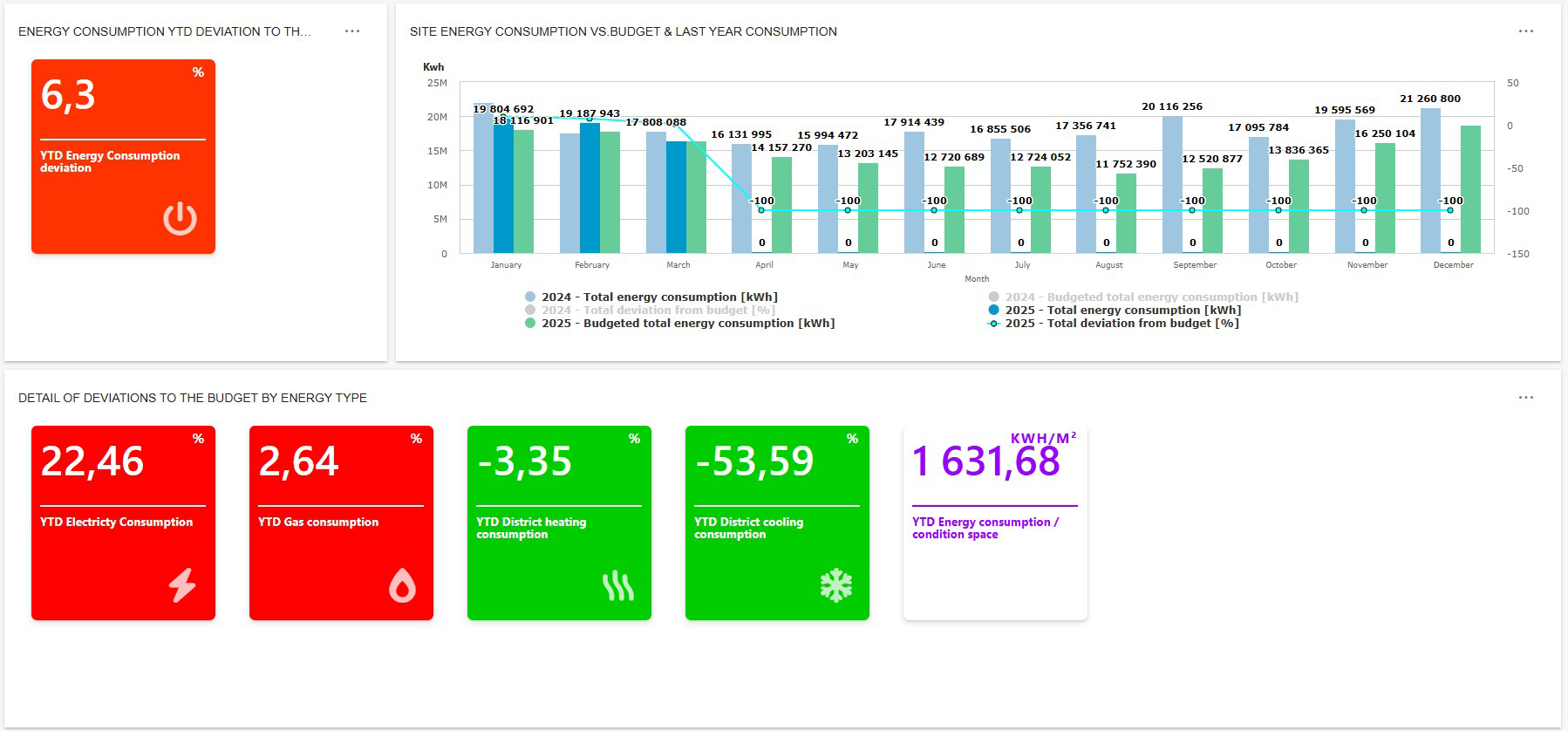
Example of a customised dashboard by theme
Notable advances include:
- Dashboards customised by theme (carbon, waste, energy mix, water stress, social data, etc.) and/or by user type (site manager, ESG manager, etc.), co-designed with clients to tailor them to their needs;
- Optimised usability, tailored to day-to-day use;
- Improved access to key indicators;
- Improved traceability and greater data reliability to facilitate auditors’ reviews;
- A focus on providing a modular and actionable ESG management and decision-support tool.
These developments enable organisations to improve efficiency, buy-in, clarity and autonomy when monitoring their ESG commitments. They demonstrate VPWhite’s strong commitment to business-focused UX, placing users at the heart of the sustainable transformation process.
Automating the ‘last mile of reporting’ with the Workiva platform
The final session of the morning was dedicated to the partner solution Workiva, which complements data collection tools such as Enablon by covering the critical phase of sustainability report publication.
With Workiva, companies can:
- Automatically feed data from their various data collection tools;
- Track changes and successive versions of the report;
- Collaboratively develop the report’s narratives and chapters;
- Restrict access to the sustainability report according to the stakeholders involved in its drafting;
- Automatically manage XBRL tagging;
- Produce a report ready for publication and audit with complete transparency.
A forum for peer-to-peer exchange to foster collective intelligence
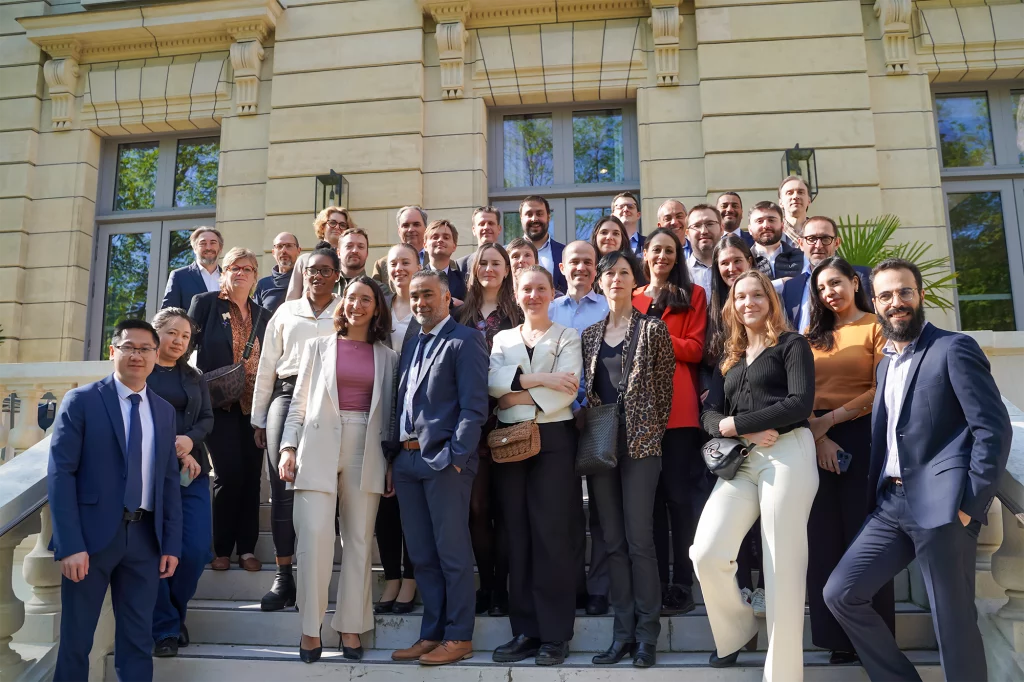
Beyond the content presented and the experiences shared, the Impact & Insight event was also designed as a genuine forum for ESG professionals to meet and interact. This format enabled our clients to forge or strengthen links with their counterparts, compare their respective approaches, and explore opportunities for regular discussions on shared challenges. Much like an experts’ club, this networking dynamic fosters synergies between peers, the dissemination of best practice and the sharing of practical lessons learnt from the field.
Conclusion: accelerating a sustainable and smart transformation
The
‘Impact & Insight’ event highlighted a firm conviction: ESG digital transformation necessarily requires management models that combine business expertise, strategic vision and technological capability.
In a context where regulations are becoming increasingly stringent and stakeholder expectations are evolving rapidly, it is now essential to guide companies in structuring their ESG models, incorporating the dimensions of compliance, innovation and performance.
Our mission is clear: to provide our clients with long-term support in their ESG digital transformation, offering them solutions that are ever more practical, innovative and scalable. By combining our sector-specific expertise, our knowledge of leading-edge technologies and proven methodologies, we enable our clients to turn ESG into a genuine driver of value creation.